
Dealing with an injury, joint pain, or limited mobility can make even simple activities feel challenging. You may wonder whether surgery is your only option, especially when pain continues to interfere with walking, working, exercising, or sleeping.
In many situations, physical therapy can help you recover without surgery by improving strength, mobility, flexibility, and movement through a personalized rehabilitation plan.
If you are searching for a physical therapist in Sunnyvale CA, understanding how physical therapy works and when it may be appropriate can help you make informed decisions about your recovery.
Physical therapy focuses on identifying movement limitations, addressing contributing physical factors, and gradually rebuilding your ability to perform everyday activities.
While surgery may still be necessary for certain injuries and conditions, conservative treatment can be an effective option for many people.
Can Physical Therapy Help You Recover Without Surgery?
Yes, physical therapy can help many people recover from musculoskeletal injuries and manage certain conditions without undergoing surgery.
It uses targeted exercises, movement training, education, and other appropriate treatment techniques to improve physical function and address contributing factors.
For example, someone experiencing knee pain may have difficulty climbing stairs because of muscle weakness, restricted joint mobility, or reduced movement control.
A physical therapist can assess these limitations and develop a program that gradually improves strength and functional movement.
Physical therapy may be considered for several conditions, including:
- Lower back and neck pain.
- Shoulder pain and rotator cuff-related problems.
- Knee pain and certain types of knee injuries.
- Hip pain and mobility limitations.
- Muscle strains and ligament injuries.
- Certain sports-related injuries.
- Joint stiffness and reduced flexibility.
- Recovery following certain orthopedic procedures.
The goal is to improve how your body moves and functions while helping manage symptoms.
However, physical therapy cannot repair every structural injury or replace surgery when a procedure is medically necessary.
How Does a Physical Therapist Help Speed Up Recovery?
A physical therapist helps support recovery by identifying physical limitations, selecting appropriate treatments, and gradually progressing exercises as your body adapts.
Rather than focusing only on the painful area, treatment considers how different muscles, joints, and movement patterns work together.
Here are several ways physical therapy can support recovery.
1. Identifying the Root Causes of Movement Problems
Pain does not always originate from the area where you feel it. Muscle weakness, joint stiffness, altered movement patterns, and reduced flexibility can contribute to discomfort and functional limitations.
During an initial evaluation, a physical therapist may assess:
- Joint mobility and range of motion.
- Muscle strength and flexibility.
- Balance and coordination.
- Posture and movement mechanics.
- Walking patterns and functional activities.
- Activities that increase or reduce symptoms.
This assessment helps the therapist understand your current limitations and determine which treatment approaches may be appropriate.
2. Improving Strength and Muscle Support
Muscle weakness can make everyday movements more difficult and place additional demands on certain joints. Strengthening exercises help improve the muscles that support your body during walking, lifting, bending, and other activities.
For example, someone experiencing knee discomfort may benefit from exercises targeting the quadriceps, hamstrings, glutes, and surrounding muscles.
Improving strength in these areas may help support better movement control during daily activities.
Your physical therapist will select exercises based on your condition and gradually adjust their difficulty as your strength improves.
3. Restoring Joint Mobility and Flexibility
Stiff joints and tight muscles can restrict movement and make ordinary activities uncomfortable.
Limited shoulder mobility may interfere with reaching overhead, while restricted hip movement can make walking or sitting more difficult.
Physical therapy may use:
- Gentle stretching exercises.
- Active range-of-motion exercises.
- Joint mobility techniques when appropriate.
- Soft tissue techniques when indicated.
- Functional movement exercises.
Improving flexibility and mobility can help you perform daily activities more comfortably and move with greater confidence.
4. Improving Balance and Coordination
Injuries, surgery, prolonged inactivity, and certain medical conditions can affect balance and coordination. These limitations may increase the difficulty of walking, changing direction, or navigating uneven surfaces.
Balance training helps improve your ability to control body movements and respond to changes in position.
Depending on your needs, exercises may include controlled weight shifting, single-leg balance activities, coordination drills, and functional movement training.
These exercises can be especially useful for people recovering from lower-extremity injuries or experiencing mobility-related balance difficulties.
5. Teaching Safer Movement Techniques
Sometimes, the way you perform everyday activities can contribute to discomfort or place unnecessary stress on certain body areas. Physical therapists help patients understand how to move more efficiently during daily tasks.
You may receive guidance on:
- Proper lifting and bending techniques.
- Maintaining comfortable working positions.
- Adjusting exercise routines during recovery.
- Improving walking and stair-climbing mechanics.
- Managing activity levels during symptom flare-ups.
Learning these strategies can help you protect your progress while gradually returning to your normal routine.
Which Conditions May Improve With Physical Therapy Instead of Surgery?
Several orthopedic and musculoskeletal conditions may respond well to conservative treatment, depending on their severity and the individual’s overall health.
A physical therapist can evaluate your movement limitations and help determine whether rehabilitation may be an appropriate option.
1. Lower Back Pain
Lower back pain can develop from several factors, including muscle strain, reduced mobility, repetitive loading, and certain spinal conditions. Physical therapy may help improve trunk strength, flexibility, movement control, and tolerance for everyday activities.
Treatment may include:
- Core strengthening exercises.
- Hip and lower back mobility exercises.
- Movement education.
- Gradual functional strengthening.
- Activity modification.
Some people with back pain improve through conservative treatment, while others may need additional medical evaluation or intervention.
2. Knee Pain
Knee pain can affect walking, climbing stairs, squatting, and participating in sports. Depending on the underlying condition, physical therapy may help improve muscle strength, joint mobility, and lower-extremity movement control.
Rehabilitation may be useful for certain cases of knee osteoarthritis, patellofemoral pain, and non-severe sports-related injuries.
3. Shoulder Pain
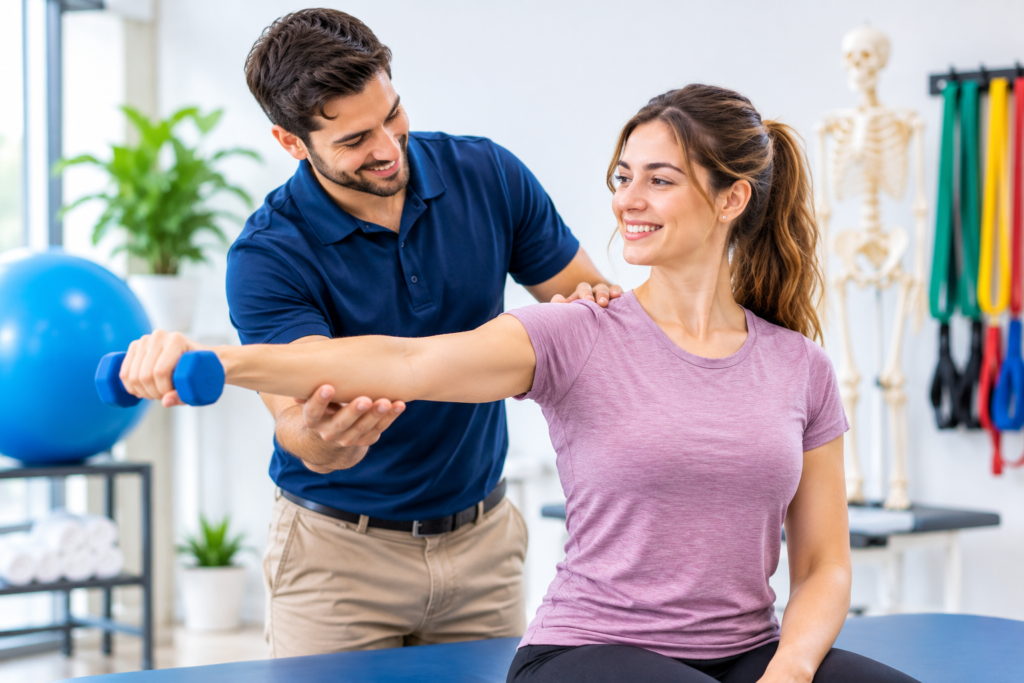
Shoulder discomfort can make reaching overhead, lifting objects, dressing, or sleeping difficult. Certain rotator cuff-related conditions and movement limitations may improve with appropriately selected exercises and rehabilitation.
A physical therapist may focus on shoulder mobility, rotator cuff strength, shoulder blade control, and gradual return to functional activities.
4. Hip Pain
Hip stiffness and weakness can affect walking, standing, bending, and getting in and out of a chair. Physical therapy may help improve hip strength, flexibility, balance, and movement coordination.
Treatment depends on whether symptoms are related to muscle problems, joint conditions, or other underlying causes.
5. Sports-Related Injuries
Athletes often experience muscle strains, ligament injuries, tendon problems, and overuse conditions. Physical therapy can help restore strength, mobility, balance, and sport-specific movement skills.
A progressive rehabilitation program may also include running mechanics, jumping exercises, agility training, and return-to-sport testing when appropriate.
What Happens During a Physical Therapy Recovery Program?
A physical therapy recovery program generally begins with an evaluation and progresses through individualized treatment stages. The exact process depends on your diagnosis, symptoms, physical abilities, and recovery goals.
Step 1: Initial Evaluation
Your physical therapist reviews your symptoms, medical history, previous injuries, and activity limitations. They may assess your strength, flexibility, joint movement, balance, and functional abilities.
Step 2: Personalized Treatment Planning
Based on the evaluation, your therapist develops a treatment plan with practical goals. These may include reducing movement-related discomfort, improving walking ability, restoring strength, or returning to recreational activities.
Step 3: Guided Rehabilitation
Treatment may involve therapeutic exercises, mobility training, balance activities, manual therapy when appropriate, and education about managing symptoms.
Step 4: Progressive Strengthening
As your abilities improve, exercises may become more challenging. The goal is to gradually build the strength, endurance, and movement control required for your everyday activities.
Step 5: Functional Recovery
Your therapist helps you work toward activities that matter to you, whether that means returning to work, walking longer distances, lifting comfortably, or participating in sports.
Step 6: Long-Term Injury Prevention
Before completing therapy, you may receive a home exercise program and guidance on maintaining strength, flexibility, and movement habits.
Recovery timelines vary. Some conditions improve within a few weeks, while more complex injuries may require several months of rehabilitation.
Does Physical Therapy Always Prevent the Need for Surgery?
No. Physical therapy can help many people manage certain conditions without surgery, but it does not eliminate the need for surgical treatment in every situation.
Some injuries involve significant structural damage that may require surgical evaluation. Examples include certain complete tendon ruptures, unstable fractures, severe ligament injuries, and other conditions where conservative treatment may not provide adequate results.
Physical therapy may still play an important role before or after surgery by helping improve strength, mobility, and functional recovery.
If symptoms are not improving, your healthcare provider may recommend additional evaluation, imaging, specialist consultation, or other treatment options.
The decision should be based on your diagnosis, treatment response, and individual circumstances.
How Can You Get Better Results From Physical Therapy?
Your participation plays an important role in rehabilitation. Consistency, communication, and following an appropriate exercise plan can help you make meaningful progress.
Here are some practical ways to support your recovery:
- Attend scheduled appointments: Consistent visits allow your therapist to monitor progress and adjust your treatment.
- Follow your home exercise program: Exercises prescribed for home help reinforce the work completed during appointments.
- Communicate about symptoms: Let your therapist know if an exercise causes significant discomfort or if your symptoms change.
- Avoid rushing recovery: Increasing activity too quickly may aggravate symptoms or interfere with healing.
- Maintain appropriate activity levels: Staying active within your current abilities can help prevent unnecessary deconditioning.
- Follow medical recommendations: Medication, imaging, specialist care, or surgery may still be appropriate depending on your condition.
Remember that recovery is not always a straight line. Some days may feel easier than others, and your treatment plan may need adjustments along the way.
When Should You See a Physical Therapist in Sunnyvale, CA?
Consider scheduling a physical therapy evaluation if pain, weakness, stiffness, or limited mobility is affecting your daily activities. You do not necessarily need to wait until symptoms become severe before seeking professional guidance.
A physical therapist may be able to help if you:
- Experience recurring neck, back, shoulder, hip, or knee discomfort.
- Have difficulty walking, bending, lifting, or climbing stairs.
- Are recovering from a sports injury.
- Notice reduced strength or flexibility after an injury.
- Need rehabilitation following surgery.
- Have difficulty returning to exercise or recreational activities.
- Experience balance problems or reduced confidence while walking.
If you experience a major injury, sudden severe pain, new significant weakness, or other concerning symptoms, seek appropriate medical assessment rather than relying on physical therapy alone.
For individuals searching for a physical therapist in Sunnyvale CA, choosing a clinic that provides individualized evaluations and one-on-one attention can help ensure your rehabilitation program addresses your specific needs and goals.
Frequently Asked Questions
Can physical therapy help me avoid knee surgery?
Physical therapy may help some people with knee pain improve strength, mobility, and daily function without surgery. The outcome depends on the underlying condition, severity of the injury, and response to conservative treatment.
How long does physical therapy take to work?
The timeline varies depending on your diagnosis, symptom severity, overall health, and consistency with treatment. Some people notice improvements within a few sessions, while more complex conditions require several weeks or months of rehabilitation.
Is physical therapy better than surgery?
Neither treatment is universally better. Physical therapy is often considered a conservative treatment option for appropriate conditions, while surgery may be necessary when there is significant structural damage or when non-surgical treatment is insufficient.
Can physical therapy help with chronic pain?
Yes, physical therapy may help people with certain chronic musculoskeletal conditions improve mobility, strength, physical activity tolerance, and everyday function. Treatment should be tailored to the underlying condition and individual needs.
Do I need a doctor’s referral to see a physical therapist in California?
California allows direct access to physical therapy under specific legal conditions. However, limitations apply to the duration and scope of treatment without physician involvement. Insurance plans may also have their own referral or authorization requirements, so check with your provider and the clinic before scheduling.
What should I wear to my first physical therapy appointment?
Wear comfortable clothing that allows you to move easily. Athletic clothing, flexible pants, and supportive shoes are generally suitable, depending on the area being evaluated.
Can I continue exercising while attending physical therapy?
In many cases, yes. However, your exercise routine may need modifications based on your injury and current abilities. Your physical therapist can help determine which activities are appropriate and how to progress safely.
Take a Personalized Approach to Recovery
Pain and mobility limitations can affect more than just your physical comfort. They can interfere with your work, exercise routine, independence, and ability to enjoy everyday activities.
At Golden Hills Orthopedic and Sports Physical Therapy, we believe rehabilitation should focus on the individual, not just the injured body part.
We provide personalized, one-on-one physical therapy with an emphasis on research-informed treatment, patient education, and meaningful recovery goals. Our approach considers your movement limitations, physical abilities, lifestyle, and the activities you want to return to.
Depending on your needs, your rehabilitation may include therapeutic exercises, mobility training, strength development, balance training, and other appropriate physical therapy techniques.
If you are looking for a physical therapist in Sunnyvale CA, Golden Hills Orthopedic and Sports Physical Therapy is committed to helping individuals work toward improved movement and function.
Whether you are managing persistent pain, recovering from an injury, or hoping to explore non-surgical treatment options, we can help you understand how an individualized rehabilitation program may support your recovery.
