
A sports injury can make everyday activities, workouts, and even simple movements feel more difficult than they should.
Whether you are dealing with a sprained ankle, a pulled muscle, knee pain, or a shoulder injury, a physical therapist can help you understand the injury, rebuild strength, and safely return to the activities you enjoy.
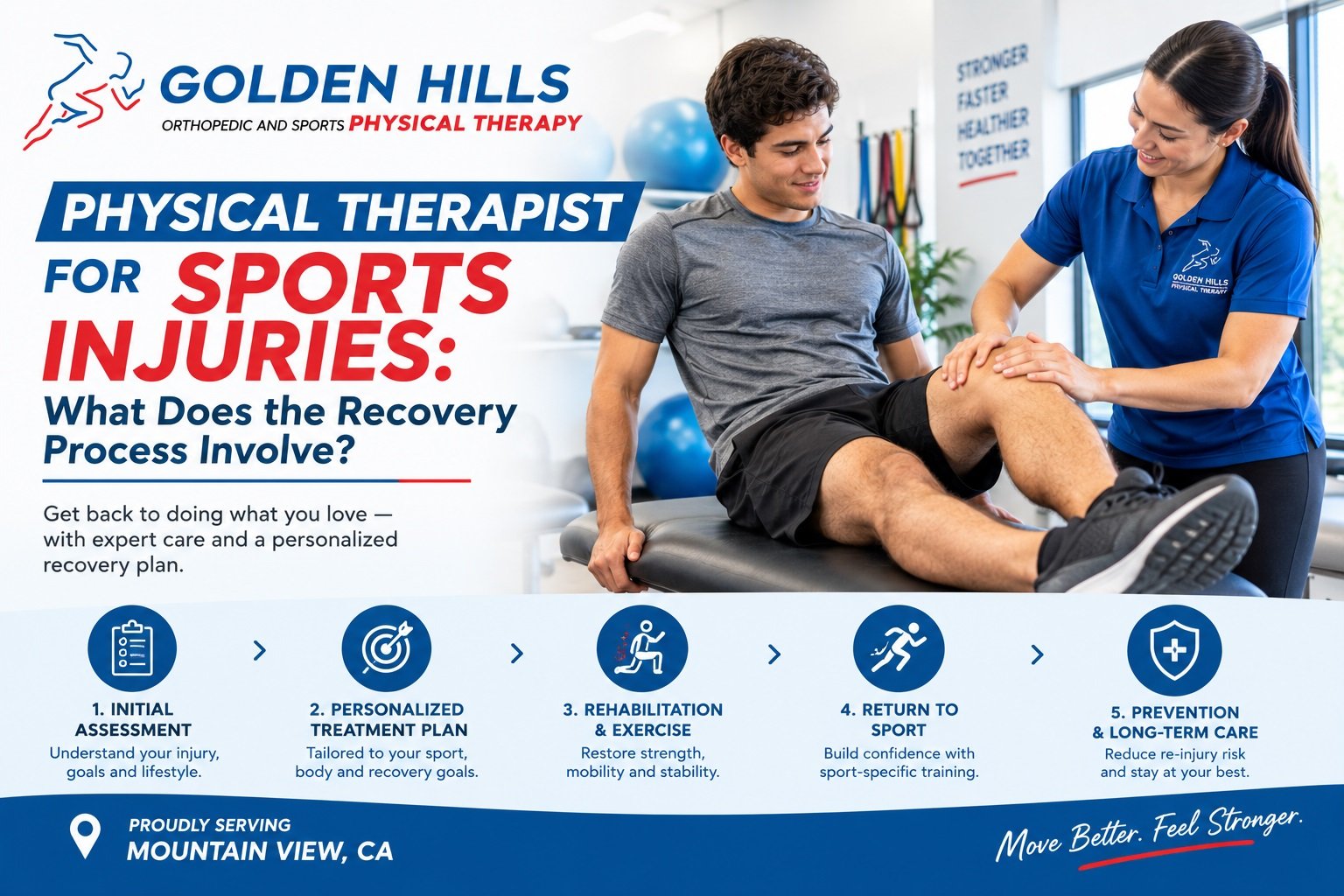
Recovery usually involves an initial assessment, a personalized treatment plan, targeted exercises, and gradual progression toward your physical goals.
If you are searching for a physical therapist in Sunnyvale, CA, understanding what to expect from sports injury rehabilitation can help you make informed decisions about your care.
Key Takeaways
- Sports injury rehabilitation begins with an assessment of pain, mobility, strength, and movement patterns.
- Physical therapy may include therapeutic exercises, mobility training, balance work, and sport-specific activities.
- Recovery timelines depend on the injury, its severity, and your response to treatment.
- Returning to sports safely involves rebuilding function and meeting appropriate activity-specific goals, not just waiting for pain to disappear.
What Does a Physical Therapist Do for Sports Injuries?
A physical therapist helps people recover movement, strength, coordination, and physical function after a sports injury. Treatment is tailored to the injured area, the demands of your sport, and the activities you want to resume.
Sports injuries can affect more than the body part that hurts. For example, an ankle sprain may change your walking pattern, while a knee injury may affect how you land, squat, or change direction.
A physical therapist evaluates these movement changes and develops a treatment plan based on your needs. Depending on the injury, rehabilitation may involve:
- Pain management: Strategies to help manage symptoms and improve tolerance for movement.
- Mobility exercises: Activities that address stiffness and restricted joint movement.
- Strength training: Exercises that rebuild muscle capacity and support injured tissues.
- Balance and coordination training: Activities that improve stability and control.
- Movement retraining: Practice with movements such as jumping, landing, running, and pivoting.
- Sport-specific conditioning: Gradual preparation for the physical demands of your sport.
What Are the Stages of Sports Injury Physical Therapy?
Sports injury recovery generally progresses through several stages, from the initial evaluation to a gradual return to athletic activity.
The stages may overlap, and your physical therapist will adjust the plan according to your symptoms, healing, and functional progress.
1. Initial Evaluation and Injury Assessment
The first step is understanding what happened and how the injury affects your movement. Your physical therapist will typically ask about your symptoms, injury history, sport, training routine, and recovery goals.
The evaluation may include checking:
- Pain levels and symptom patterns
- Joint mobility and flexibility
- Muscle strength and endurance
- Balance and coordination
- Walking, running, or other relevant movement patterns
- Your ability to perform sport-specific tasks safely
Your therapist may also determine whether you need medical evaluation or further testing before beginning or progressing rehabilitation.
2. Managing Pain and Restoring Mobility
Early treatment often focuses on making movement more comfortable while protecting the injured area. The right approach depends on the type and severity of the injury.
Your physical therapist may recommend temporary activity modifications, gentle movement, appropriate mobility exercises, or other strategies suited to your condition.
Complete rest is not always necessary, but pushing through significant pain can aggravate some injuries. Your therapist can help you identify which activities are appropriate and when to modify your routine.
3. Rebuilding Strength and Stability
As symptoms improve and the injury can tolerate more activity, rehabilitation typically shifts toward rebuilding strength and stability. These qualities help your body handle the demands of training and competition.
Exercises may target the injured area and the surrounding muscle groups. For example, rehabilitation after a knee injury may include strengthening the quadriceps, hamstrings, hips, and calf muscles.
Your program may also include balance training, controlled resistance exercises, and single-leg movements. The difficulty and intensity should increase gradually as your function improves.
4. Improving Sport-Specific Movement
Returning to sport requires more than being able to walk without pain. Athletes often need to regain the ability to accelerate, decelerate, jump, land, pivot, throw, or change direction.
Your physical therapist may introduce sport-specific drills as your recovery progresses. These activities help assess whether you can tolerate movements that resemble the demands of practice and competition.
Progression should be based on your injury, symptoms, strength, movement quality, and response to increasing activity rather than a fixed schedule alone.
5. Preparing for a Safe Return to Sport
The final stage focuses on determining whether you are ready to resume your usual level of athletic activity. Your therapist may evaluate strength, balance, endurance, agility, and relevant functional tasks.
Depending on your injury and sport, your return may begin with modified practice, reduced training volume, or limited participation before progressing toward full activity.
Returning too quickly can increase the risk of aggravating an injury or experiencing another injury. Your physical therapist can help you develop a gradual return-to-sport plan and identify areas that still need attention.
How Long Does Recovery From a Sports Injury Take?
Sports injury recovery can take anywhere from a few weeks to several months or longer, depending on the injury and its severity. There is no single timeline that applies to every athlete.
The following examples illustrate how recovery needs can differ. They are general estimates, not individual treatment predictions.
| Type of injury | General recovery considerations |
| Mild muscle strain | May improve over days to several weeks, depending on the affected muscle and severity. |
| Ankle sprain | Recovery may take a few weeks for some mild sprains, while more severe sprains can take several months. |
| Tendon-related injury | Recovery may require weeks to months of appropriately progressed loading and activity modification. |
| ACL injury or reconstruction | Rehabilitation commonly takes many months, with return to pivoting sports often requiring around 9–12 months or longer after reconstruction. |
| Shoulder injury | Recovery varies considerably depending on the affected tissue, severity, and whether surgery is needed. |
Several factors can influence your recovery:
- The severity and location of the injury
- Whether a ligament, tendon, muscle, bone, or joint is involved
- Your previous fitness level and injury history
- Your ability to follow an appropriate rehabilitation program
- The physical demands of your sport
- Whether additional medical treatment or surgery is necessary
Progress is not always linear. Some soreness or temporary changes in symptoms may occur during rehabilitation, but worsening pain, increasing swelling, or declining function should be discussed with your healthcare provider.
What Types of Sports Injuries Can Physical Therapy Help With?
Physical therapy can support rehabilitation for many sports-related injuries, although the appropriate treatment depends on the diagnosis and severity.
Common conditions that may benefit from physical therapy include:
1. Ankle Sprains
An ankle sprain occurs when the ligaments supporting the ankle are stretched or torn. Rehabilitation may focus on restoring ankle movement, rebuilding calf and ankle strength, improving balance, and preparing for running or jumping.
2. Knee Injuries
Knee injuries may involve ligaments, cartilage, tendons, or surrounding muscles. Depending on the condition, treatment may include strengthening, mobility exercises, movement retraining, and progressive functional training.
3. Muscle Strains
Muscle strains occur when muscle fibers are overstretched or torn. Physical therapy can help restore flexibility, strength, and the ability to tolerate progressively more demanding activity.
4. Shoulder Injuries
Throwing, swimming, weightlifting, and contact sports can place substantial demands on the shoulder. Rehabilitation may address shoulder mobility, rotator cuff strength, shoulder blade control, and sport-specific movement mechanics.
5. Tendon Injuries
Tendon problems, including Achilles or patellar tendinopathy, can cause pain during running, jumping, and other repetitive activities. Treatment often involves adjusting activity levels and gradually increasing the tendon’s capacity to tolerate load.
6. Overuse Injuries
Overuse injuries may develop when repetitive training demands exceed your body’s ability to recover. A physical therapist can help identify contributing factors, modify training, and develop a progressive exercise program.
Not every injury can be managed with physical therapy alone. Suspected fractures, significant ligament tears, severe muscle injuries, and other serious conditions may require medical assessment or additional treatment.
What Exercises Might a Physical Therapist Recommend for Sports Injury Recovery?
Exercises depend on your injury, healing stage, and functional goals. Your physical therapist will select activities that challenge the affected area appropriately without exceeding its current capacity.
Common rehabilitation exercises may include:
- Range-of-motion exercises: Help restore comfortable movement after stiffness or injury.
- Resistance exercises: Rebuild strength in muscles that support the affected joint.
- Balance exercises: Improve stability and control, particularly after ankle and knee injuries.
- Core and hip strengthening: Support control during running, lifting, jumping, and changes of direction.
- Plyometric exercises: Develop jumping and landing capacity when appropriate for the injury and stage of recovery.
- Agility drills: Help prepare athletes for faster movements and changes of direction.
For example, someone recovering from an ankle sprain may progress from controlled ankle movements to calf raises, single-leg balance exercises, hopping drills, and eventually running or cutting drills.
These exercises should not be treated as a universal routine. The appropriate starting point and progression depend on the injury, and some activities may be unsuitable during early healing.
How Can You Reduce the Risk of Another Sports Injury?
Although no rehabilitation program can eliminate injury risk, addressing strength, movement control, training load, and recovery habits may help reduce the likelihood of certain sports injuries.
Consider these practical strategies:
- Follow a progressive training plan. Increase training intensity and volume in a manageable way rather than making sudden changes.
- Warm up before demanding activity. Prepare your body with movements appropriate for your sport.
- Build strength consistently. Include exercises that support the muscles and joints involved in your activity.
- Practice sport-specific movement. Develop control during jumping, landing, sprinting, throwing, or changing direction.
- Allow time for recovery. Sleep, rest days, and appropriate adjustments to training help support adaptation.
- Respond to persistent symptoms. Pain that repeatedly returns during exercise may indicate a need to modify training or seek professional assessment.
- Complete your rehabilitation plan. Continue working toward functional goals even after everyday activities become more comfortable.
A physical therapist can help identify individual movement limitations and recommend strategies that fit your sport, training schedule, and recovery needs.
When Should You See a Physical Therapist for a Sports Injury?
Consider seeing a physical therapist if pain, stiffness, weakness, or reduced mobility is preventing you from exercising, training, or completing everyday activities.
An assessment may be useful even when symptoms seem manageable but repeatedly return with activity.
Signs that professional guidance may help include:
- Pain that persists or returns whenever you resume training
- Difficulty bearing weight or moving a joint normally
- Swelling or stiffness that limits activity
- Weakness or instability during sport-specific movements
- Difficulty regaining strength after an injury or surgery
- Uncertainty about when it is safe to return to exercise
Seek urgent medical evaluation for a suspected fracture, a visibly deformed joint, inability to bear weight after a significant injury, sudden severe swelling, or a joint that becomes locked. A cold, pale, or numb limb also requires urgent assessment.
If you experience chest pain, difficulty breathing, or other severe symptoms during or after exercise, seek emergency medical care.
A physical therapist can help determine an appropriate rehabilitation approach, but an initial medical evaluation may be necessary when the injury is severe or the diagnosis is uncertain.
How Can You Find the Right Physical Therapist in Sunnyvale, CA?
Choosing a physical therapist involves finding someone whose experience, treatment approach, and communication style match your needs.
For sports injury recovery, it is especially helpful to work with a provider who understands the physical demands of your sport and can guide your progression toward meaningful functional goals.
When comparing providers, consider the following:
- Relevant experience: Ask whether the therapist treats your type of injury and understands your sport’s demands.
- Individualized care: Look for an approach that considers your symptoms, goals, activity level, and progress.
- Exercise-based rehabilitation: Ask how the program will address strength, mobility, balance, and sport-specific function.
- Progress monitoring: Understand how your therapist will evaluate improvement and determine when to advance your program.
- Communication: Choose a provider who explains the treatment plan and helps you understand your role in recovery.
- Coordination of care: If you need imaging, specialist evaluation, or postoperative rehabilitation, ask how the therapist coordinates with other healthcare professionals.
If you are searching for a physical therapist in Sunnyvale, CA, Golden Hills Orthopedic and Sports Physical Therapy offers personalized rehabilitation focused on helping patients improve movement, rebuild function, and work toward their individual goals.
The clinic’s one-on-one approach emphasizes patient education and individualized treatment. Your care plan should reflect your specific injury, current abilities, and the activities you hope to return to.
Frequently Asked Questions About Sports Injury Physical Therapy
Can physical therapy help you recover from a sports injury without surgery?
Some sports injuries can be managed without surgery, while others require surgical treatment or additional medical care. Physical therapy can support conservative treatment when appropriate and is also an important part of rehabilitation after many orthopedic surgeries.
Should you continue exercising when you have a sports injury?
It depends on the injury and the type of exercise. Some activities can be modified to maintain conditioning, but others may aggravate the affected tissue, so consult a healthcare professional if you are unsure what is safe.
How often should you attend physical therapy for a sports injury?
Visit frequency depends on your injury, rehabilitation goals, and the treatment plan. Your physical therapist can recommend an appropriate schedule and explain which exercises to perform between appointments.
How do you know when you are ready to return to sports?
Readiness depends on more than pain levels. Your therapist may assess strength, mobility, balance, endurance, movement quality, and your ability to complete sport-specific tasks before recommending a gradual return.
Can physical therapy help prevent recurring sports injuries?
Physical therapy may help address contributing factors such as weakness, reduced mobility, balance deficits, and movement-control problems. Ongoing conditioning and appropriate training adjustments can also support injury prevention, although no approach guarantees that an injury will not recur.
Is physical therapy useful after sports injury surgery?
Yes. Rehabilitation is often an important part of recovery after procedures such as ACL reconstruction or certain shoulder surgeries. Treatment progresses according to the surgical procedure, tissue healing, medical precautions, and individual functional goals.
How do I find a physical therapist in Sunnyvale, CA, for a sports injury?
Look for a licensed physical therapist with experience treating your injury and supporting your return to activity. Ask about individualized care, rehabilitation progression, communication, and how treatment goals will be measured.
Take the Next Step Toward Sports Injury Recovery
A sports injury can interrupt your routine, affect your confidence, and make it difficult to return to the activities you enjoy. A structured rehabilitation program can help you understand your limitations, rebuild physical capacity, and work toward a gradual return to sport.
Golden Hills Orthopedic and Sports Physical Therapy provides personalized, one-on-one care focused on your movement needs and recovery goals.
If an injury is limiting your ability to exercise or participate in sports, consider scheduling an evaluation to discuss an appropriate rehabilitation plan.
