
Getting injured during a game, workout, or weekend activity can leave you eager to get back to normal. And that is often where people make their first mistake. You feel a little better, decide the injury is probably fine, and jump straight back into the activity you were doing before.
Unfortunately, feeling better does not always mean you are fully recovered. Pushing too hard, doing too little, ignoring symptoms, or skipping rehabilitation can all make recovery more difficult.
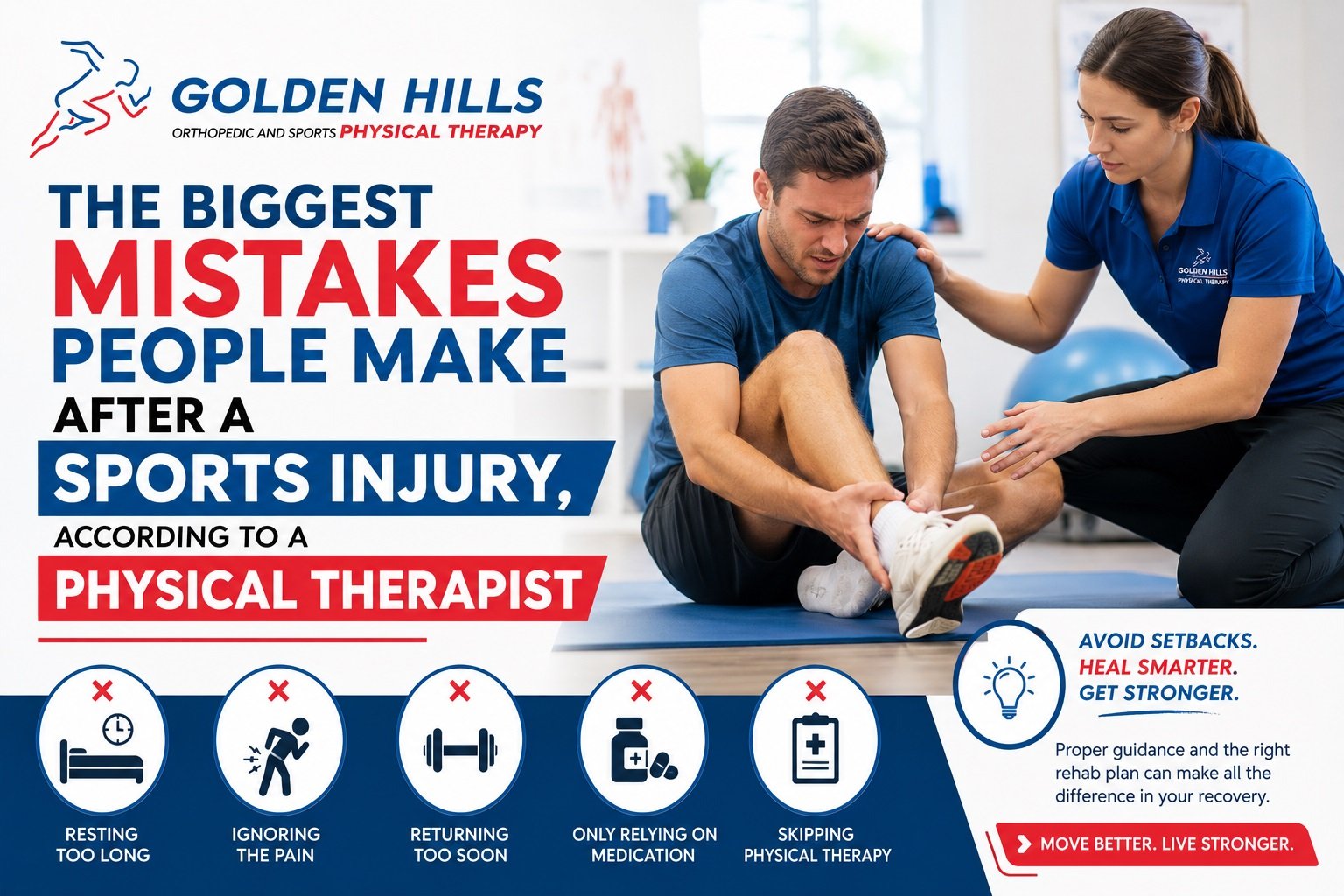
Knowing what not to do after a sports injury can be just as important as knowing what to do.
With guidance from a qualified physical therapist in Sunnyvale CA, you can better understand your injury, recovery needs, and the steps involved in returning to activity safely.
1. Returning to Sport Too Soon
One of the most common mistakes after a sports injury is trying to get back to the game before the body is ready.
Pain may have decreased, but that does not necessarily mean strength, flexibility, balance, coordination, or movement have returned to their previous levels.
Returning too quickly can place additional stress on an injured area and may increase the risk of aggravating the original problem or developing another injury.
A gradual return to activity allows your body to build capacity rather than immediately returning to the demands of full-intensity sport.
2. Ignoring Pain Because You Want to Keep Training
Athletes are often used to pushing through discomfort. That mindset can be useful during training, but it can become a problem when pain is signalling an injury.
Trying to work through persistent or worsening pain may prevent the affected area from recovering properly.
This does not mean every sensation during rehabilitation is necessarily harmful. Recovery exercises can involve effort and controlled discomfort in some circumstances. The important distinction is understanding what your symptoms mean.
A physical therapist can help you determine which movements are appropriate and when an activity needs to be modified.
3. Doing Absolutely Nothing
After getting injured, some people go to the opposite extreme and stop all movement.
Rest can be appropriate during certain stages of recovery, but prolonged inactivity is not always the best solution. Depending on the injury, too much rest may contribute to stiffness, reduced strength, loss of mobility, and decreased confidence in movement.
Your recovery plan should match the injury and your current condition. A physical therapist in Sunnyvale CA can help determine what type and level of movement are appropriate as you recover.
4. Skipping Physical Therapy Exercises
You may feel better after a few appointments and wonder whether you really need to keep doing the exercises at home.
This is another common mistake.
Rehabilitation exercises are often designed to address specific limitations such as weakness, reduced mobility, balance problems, movement control, or reduced endurance.
Consistency matters. Completing the recommended exercises as instructed can support the progress made during your therapy sessions.
If an exercise feels too difficult, uncomfortable, or unclear, tell your therapist rather than simply abandoning it.
5. Treating the Symptoms Instead of the Problem
Ice, heat, compression, rest, and pain management may sometimes be useful components of injury care, depending on the situation.
However, reducing pain does not necessarily address why the injury happened.
For example, an athlete may continue experiencing symptoms because of weakness, limited mobility, poor movement mechanics, inadequate conditioning, or returning to activity too quickly.
A comprehensive assessment looks beyond the immediate discomfort and considers the factors contributing to the injury and recovery.
6. Assuming Every Injury Needs the Same Recovery Plan
A sprained ankle, muscle strain, shoulder injury, knee problem, and overuse injury do not require identical rehabilitation.
Even two people with similar injuries may have different recovery needs based on their age, activity level, previous injuries, fitness, goals, and the demands of their sport.
Following generic exercises found online may not address your particular limitations.
An individualized rehabilitation plan can be adjusted as your strength, movement, and tolerance improve.
7. Focusing Only on the Injured Area
The site of pain is not always the only area that matters.
Sports movements involve multiple joints and muscle groups working together. A problem in one area can sometimes be influenced by weakness, restricted movement, or poor control elsewhere in the body.
A physical therapist may assess movement patterns rather than focusing solely on the location where you feel pain.
This broader approach can help identify factors that may be contributing to the problem and guide a more complete rehabilitation program.
8. Going Straight From Recovery to Full-Intensity Training
Being able to walk without pain does not necessarily mean you are ready to sprint, jump, cut, lift, or compete.
Sport places different demands on the body than everyday activities.
A good return-to-sport process gradually introduces activities that reflect what you actually need to do. Depending on your sport, this may involve progressing through strength work, balance exercises, running, jumping, agility, change-of-direction movements, or sport-specific drills.
The goal is to build confidence and physical capacity before returning to full competition.
9. Forgetting About Injury Prevention
Once the pain disappears, it is easy to forget everything that happened.
But returning to the exact same training habits without addressing contributing factors can leave you vulnerable to another problem.
Your rehabilitation may highlight areas such as strength, flexibility, balance, technique, workload management, or conditioning that could benefit from continued attention.
Keeping some of your rehabilitation exercises as part of your regular training routine can support ongoing physical preparedness.
10. Waiting Too Long to Get Professional Help
Perhaps the biggest mistake is assuming the injury will simply resolve on its own.
Some minor injuries may improve with appropriate self-care, but persistent pain, swelling, weakness, reduced movement, instability, or recurring symptoms deserve professional assessment.
Getting an injury evaluated can help you understand what may be happening and what steps are appropriate for recovery.
You do not necessarily need to wait until an injury becomes severe before seeking professional guidance.
What Should You Do After a Sports Injury?
-
Pay Attention to Your Symptoms
Notice what movements cause pain, whether symptoms are improving or worsening, and whether swelling, weakness, stiffness, or instability is present.
These details can help a healthcare professional understand your condition.
-
Avoid Making Sudden Changes
Do not immediately return to your previous training volume or intensity simply because you feel somewhat better.
A gradual progression is often more appropriate than going from complete rest to full activity.
-
Follow Your Rehabilitation Plan
If a physical therapist provides exercises or activity modifications, follow the recommended progression and communicate if something is not working.
-
Focus on Your Actual Goals
Recovery should reflect what you want to return to.
A recreational runner may have different rehabilitation goals from a competitive basketball player, weightlifter, or weekend tennis player.
When Should You See a Physical Therapist?
Consider seeking professional assessment if you have persistent or recurring pain, reduced mobility, weakness, swelling, difficulty performing normal activities, or symptoms that prevent you from participating in your sport.
A physical therapist can assess your movement and physical limitations and develop an appropriate rehabilitation plan based on your condition and goals.
If you experience a severe injury, significant swelling, deformity, inability to bear weight, or another urgent symptom, seek appropriate medical evaluation promptly.
Final Thoughts
A sports injury can be frustrating, especially when you are eager to return to the activities you enjoy. But rushing the process or ignoring the body’s signals can make recovery more complicated.
Avoiding common mistakes such as returning too soon, skipping rehabilitation, doing too little, and treating only the symptoms can help you approach recovery more thoughtfully.
The right rehabilitation plan should progress with you rather than simply putting you on a fixed timeline.
At Golden Hills Physical Therapy, our focus is on helping patients understand their movement, address physical limitations, and work towards meaningful recovery goals.
Our experienced team takes an individualized approach rather than assuming every injury or patient needs the same treatment.
Whether you are working towards returning to sport, getting back to exercise, or simply moving more comfortably in everyday life, professional physical therapy can provide structured guidance throughout the rehabilitation process.
Our physical therapist in Sunnyvale CA can help you take the next step towards a stronger, more confident return to activity.
Book an assessment and get a recovery plan built around your movement, goals, and lifestyle.
FAQs
How soon should I see a physical therapist after a sports injury?
It depends on the injury and its severity. If pain, swelling, weakness, limited movement, or difficulty returning to normal activities persists, a physical therapy assessment may help identify what is limiting your recovery.
Should I rest completely after a sports injury?
Not necessarily. Some injuries require a period of rest or activity modification, but prolonged inactivity may contribute to stiffness and weakness. The appropriate level of movement depends on the injury.
Can I exercise if my sports injury still hurts?
It depends on the injury and the type of exercise. Continuing activities that significantly increase pain may not be appropriate. A physical therapist can help you determine which movements are suitable during recovery.
How do I know when I am ready to return to sport?
Being pain-free during everyday activities is not always enough. You may also need adequate strength, mobility, balance, coordination, endurance, and sport-specific movement capacity. A gradual return-to-sport program can help assess readiness.
Can physical therapy prevent future sports injuries?
Physical therapy may help address factors that contribute to injury, such as weakness, limited mobility, balance deficits, movement patterns, and training-related issues. Your therapist can recommend exercises and strategies suited to your activity.
Should I continue physical therapy exercises after I feel better?
If exercises have been prescribed as part of your rehabilitation, follow the recommended plan and discuss any changes with your therapist. Stopping as soon as symptoms improve may leave underlying strength or movement limitations unaddressed.
What does a physical therapist do for a sports injury?
A physical therapist can assess movement, strength, mobility, balance, and functional limitations and develop a rehabilitation program designed around your injury and recovery goals.
Can I return to sport without physical therapy?
Some minor injuries may recover without formal physical therapy. However, if symptoms persist, return to activity is difficult, or you have recurring injuries, professional assessment can help determine what may be contributing to the problem.
How long does sports injury recovery take?
Recovery time varies significantly depending on the type and severity of the injury, your overall health, activity demands, and how your body responds to rehabilitation. A physical therapist can help establish appropriate recovery milestones rather than relying on a generic timeline.
