
Pain can make everyday activities feel harder than they should. You might struggle to get out of bed with lower back pain, find it uncomfortable to sit through a workday, or avoid walking, exercising, and spending time with family because your symptoms keep returning.
If you are looking for pain management in Fremont, understanding the difference between pain medication and a broader pain management plan can help you make more informed decisions about your care.
Pain medication can help reduce discomfort, inflammation, or certain types of nerve pain, depending on the medicine and the condition. Pain management takes a wider approach by addressing your symptoms, physical function, daily habits, and possible contributing factors.
Depending on your needs, treatment may include medication, physical therapy, therapeutic exercise, education, and other appropriate medical interventions.
Key takeaways:
- Pain medication may provide short-term or ongoing symptom relief, depending on the condition and prescribed treatment.
- Pain management combines appropriate treatments to help control symptoms and improve everyday function.
- Physical therapy may help address movement limitations, muscle weakness, stiffness, and other physical factors contributing to pain.
- The right treatment plan depends on your diagnosis, medical history, symptoms, and personal goals.
What Is the Difference Between Pain Management and Pain Medication?
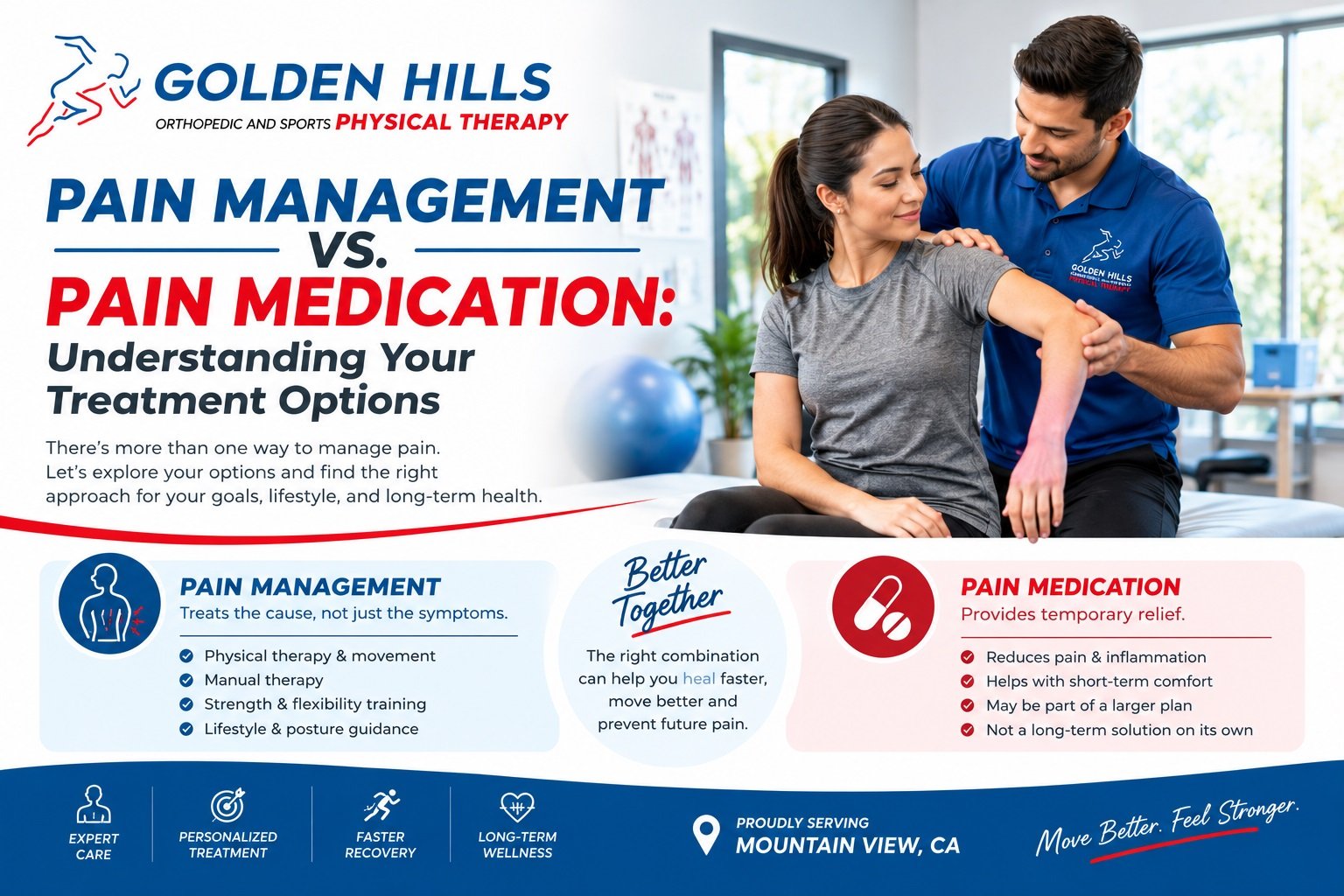
The main difference is that pain medication is one possible treatment, while pain management is a broader strategy for understanding and addressing pain.
Medication focuses primarily on symptom relief, whereas a comprehensive pain management plan may combine several approaches to improve comfort, movement, and quality of life.
For example, someone with recurring lower back pain might take medication to manage flare-ups. Their treatment plan could also include physical therapy to improve strength, movement control, and tolerance for daily activities.
Here is a closer look at how the two approaches compare.
| Feature | Pain Medication | Comprehensive Pain Management |
| Primary purpose | Reduce pain or related symptoms | Manage pain while addressing its effects on daily life |
| Treatment options | Over-the-counter or prescription medicines | Medication, physical therapy, exercise, education, and other appropriate treatments |
| Focus | Symptom relief | Symptom relief, physical function, and individual goals |
| Treatment duration | Depends on the medication and condition | May involve short-term or ongoing care |
| Personalization | Based on the medication, diagnosis, and patient factors | Combines appropriate options based on the person’s needs |
Neither approach is automatically better for every person.
Medication can be an important part of treatment, while a broader plan may be especially useful when pain affects mobility, work, sleep, exercise, or other daily activities.
How Does Pain Medication Help Relieve Pain?
Pain medication works through different mechanisms to reduce discomfort, inflammation, or the transmission and processing of pain signals.
The type of medication that may be appropriate depends on what is causing the pain, how severe it is, and your overall health.
Common categories include:
- Acetaminophen: May help relieve certain types of pain, although it does not have the same anti-inflammatory action as NSAIDs.
- Nonsteroidal anti-inflammatory drugs (NSAIDs): Medicines such as ibuprofen and naproxen may reduce pain and inflammation.
- Topical pain relievers: Certain creams, gels, or patches may help manage localized symptoms.
- Prescription medications: Depending on the diagnosis, a healthcare professional may recommend medicines for specific types of pain, including some forms of nerve pain.
- Opioid medications: These may have a role in selected situations involving severe pain, but they carry significant risks and require careful medical supervision.
Medication can be useful when pain interferes with sleep, movement, rehabilitation, or recovery after an injury or surgery. However, some medicines can cause side effects, interact with other medications, or become less appropriate when used for extended periods.
Always follow your healthcare professional’s instructions and discuss concerns about side effects, dosage, or duration.
Do not stop or change a prescribed medication without appropriate medical guidance.
What Are the Limitations of Treating Pain With Medication Alone?
Medication may reduce discomfort without fully addressing the factors that contribute to movement difficulties or recurring symptoms.
For some musculoskeletal conditions, a person may still experience stiffness, weakness, reduced endurance, or difficulty performing everyday activities even when the pain feels more manageable.
Consider a person who experiences knee pain while climbing stairs.
Medication may help reduce the discomfort, but it may not independently restore leg strength, improve balance, or address difficulties with stair climbing.
Depending on the underlying condition, additional treatment may help with:
- Improving joint mobility and flexibility.
- Building strength in muscles that support affected joints.
- Developing better movement control and exercise tolerance.
- Gradually returning to work, sports, or recreational activities.
- Learning how to manage symptom flare-ups and adjust activity levels.
This does not mean medication is ineffective or unnecessary. It means that symptom relief and functional recovery are different treatment goals, and some people benefit from addressing both.
What Non-Medication Pain Management Options Are Available?
Non-medication pain management includes treatments that help reduce discomfort, improve movement, and support daily function without relying solely on medicines.
The appropriate options depend on the type of pain, the underlying diagnosis, and the person’s medical needs.
1. Physical Therapy
Physical therapy can help people with certain musculoskeletal conditions improve strength, mobility, balance, and movement tolerance. A physical therapist evaluates how symptoms affect everyday activities and develops an exercise-based treatment plan suited to the individual’s abilities and goals.
Depending on the assessment, treatment may include:
- Therapeutic exercises to improve strength and flexibility.
- Mobility exercises for stiff joints or restricted movement.
- Manual therapy when appropriate for the condition.
- Balance and coordination training.
- Education about posture, body mechanics, pacing, and activity modification.
- A home exercise program to support progress between appointments.
For example, a person with persistent neck discomfort may benefit from a program focused on neck and shoulder mobility, strengthening, and workstation habits.
Someone with knee pain may need a different plan emphasizing leg strength, balance, and gradual progression of functional activities.
Physical therapy does not guarantee complete pain relief, and it is not a substitute for medical evaluation when symptoms require further investigation.
It can, however, be a valuable part of a broader treatment plan for appropriate conditions.
2. Therapeutic Exercise and Gradual Activity
Appropriate exercise can help maintain mobility and build the strength and endurance needed for daily activities. The goal is to find a manageable starting point and progress according to symptoms, recovery, and professional guidance.
Depending on your condition, a clinician may recommend walking, gentle mobility exercises, resistance training, or other forms of physical activity.
Exercises should be adjusted if they cause significant or worsening symptoms rather than pushing through pain indiscriminately.
3. Heat, Cold, and Activity Modification
Heat may help some people with muscle stiffness, while cold may provide temporary relief after certain injuries. Rest, temporary activity modification, and gradual return to movement can also be useful, depending on the nature of the problem.
These strategies are not appropriate for every condition. Follow condition-specific guidance, particularly after surgery or an acute injury.
4. Behavioral and Stress-Management Approaches
Persistent pain can affect sleep, mood, concentration, and confidence in movement. Stress and poor sleep may also make pain more difficult to manage, although they do not mean the pain is imaginary.
For some people, psychological approaches such as cognitive behavioral therapy, relaxation techniques, and mindfulness-based strategies can complement physical and medical treatment.
A multidisciplinary plan may be particularly helpful when pain has been affecting several aspects of daily life.
The Centers for Disease Control and Prevention (CDC) recognizes physical therapy, exercise, and certain behavioral approaches as non-opioid options for appropriate pain conditions.
The best combination depends on the individual’s circumstances.
When Should You Consider Physical Therapy for Pain Management?
Physical therapy may be worth considering when pain limits your ability to move comfortably, perform daily tasks, or return to activities you enjoy. It may also be appropriate when symptoms keep recurring or when you need help rebuilding strength and function after an injury or surgery.
You may benefit from a physical therapy evaluation if you experience:
- Recurring back or neck pain that interferes with work or sleep.
- Joint discomfort that makes walking, bending, lifting, or climbing stairs difficult.
- Muscle tightness, weakness, or reduced flexibility after an injury.
- Difficulty returning to exercise or sports following an injury.
- Reduced mobility during recovery after surgery.
- Balance problems or a fear of falling.
- Pain that leads you to avoid activities you previously performed comfortably.
A physical therapist can assess your movement, strength, mobility, and functional limitations to determine whether physical therapy is appropriate.
If your symptoms suggest a condition that needs medical assessment or additional testing, you may be referred to the appropriate healthcare professional.
For people exploring pain management in Fremont, the goal is not simply to choose between medication and exercise. It is to understand what is contributing to the symptoms and identify a safe, individualized approach to treatment.
How Do You Choose the Right Pain Management Approach?
The right approach begins with understanding the cause of your pain and how it affects your life. A treatment that works well for an acute muscle strain may not be appropriate for persistent nerve pain, inflammatory disease, or pain following a complex surgery.
Consider these steps when discussing your options with a healthcare professional.
Step 1: Identify the symptoms and their impact.
Note where the pain occurs, when it started, what makes it better or worse, and which activities have become difficult. This information can help guide an evaluation.
Step 2: Understand the likely cause.
A healthcare professional can assess your symptoms, medical history, and physical findings to determine whether further testing or specialist care is needed.
Step 3: Review medication options and risks.
Discuss potential benefits, side effects, interactions, and how long a medication may be appropriate. Tell your clinician about other medicines and supplements you use.
Step 4: Explore appropriate non-medication treatments.
Depending on the condition, options may include physical therapy, therapeutic exercise, activity modification, behavioral approaches, or other clinician-recommended interventions.
Step 5: Set realistic functional goals.
Rather than focusing only on a pain score, consider practical goals such as walking comfortably, sleeping better, returning to work, lifting safely, or resuming a favorite activity.
Step 6: Review progress and adjust the plan.
Pain and function can change during recovery. Regular reassessment helps determine whether treatment is working and whether the plan needs to be modified.
A combined approach may be appropriate for many people. The CDC recommends individualized decisions that consider benefits, risks, patient preferences, and functional goals rather than assuming one treatment is suitable for everyone.
Is Pain Management Without Medication Effective?
Pain management without medication can be helpful for certain conditions, but its effectiveness depends on the diagnosis, the severity of symptoms, and the treatment selected.
Some people can manage their symptoms with non-medication approaches, while others benefit from combining medication with rehabilitation or medical treatment.
For example, exercise-based physical therapy may help improve pain and function in people with certain forms of low back pain or hip and knee osteoarthritis. Other conditions may require medication, specialist treatment, imaging, or surgery, depending on the clinical findings.
The important distinction is that non-medication treatment is not the same as ignoring pain or refusing appropriate medical care. It involves selecting evidence-informed strategies that match the person’s needs and monitoring how well they work.
If you currently take pain medication, you do not necessarily need to discontinue it to begin physical therapy. Your healthcare professionals can help coordinate treatment so that each part of your plan supports your recovery.
Frequently Asked Questions About Pain Management and Pain Medication
Is pain management the same as taking pain medication?
No. Pain medication is one treatment option, while pain management can include medication, physical therapy, exercise, education, and other medical or behavioral interventions. The approach depends on the cause of the pain and the person’s treatment goals.
Can physical therapy help manage chronic pain?
Physical therapy may help some people with chronic pain improve strength, mobility, exercise tolerance, and everyday function. Treatment is individualized, and results vary depending on the underlying condition and other health factors.
Can I attend physical therapy while taking pain medication?
In many cases, yes. Medication and physical therapy can be complementary treatments. Inform your physical therapist about your medications and any relevant precautions, and consult the prescribing clinician before making changes to your medication routine.
Are over-the-counter pain medications safe for long-term use?
Not necessarily. Over-the-counter medications can cause side effects and may interact with other medicines or existing health conditions. Ask a healthcare professional or pharmacist about the appropriate product, dose, and duration for your circumstances.
When should I seek medical attention for pain?
Seek emergency medical care for severe or sudden pain accompanied by concerning symptoms such as chest pain, difficulty breathing, new weakness, or loss of bladder or bowel control with back pain. New neurological symptoms, significant injuries, fever with severe pain, or rapidly worsening symptoms also warrant prompt medical assessment.
Where can I find pain management support near Fremont, California?
Start by discussing your symptoms with a qualified healthcare professional who can help determine the appropriate next steps. Depending on your needs, your care may involve a physician, physical therapist, pain specialist, or a combination of professionals.
Explore Personalized Pain Management at Golden Hills Orthopedic and Sports Physical Therapy
Living with pain can make even familiar routines feel frustrating, especially when symptoms keep returning or limit the activities that matter to you.
At Golden Hills Orthopedic and Sports Physical Therapy, we recognize that effective rehabilitation begins with understanding the person behind the symptoms, including their movement limitations, daily responsibilities, and recovery goals.
Our approach emphasizes one-on-one care, individualized treatment planning, patient education, and research-informed physical therapy.
Depending on your evaluation and needs, physical therapy may focus on improving mobility, building strength, restoring balance, developing better movement strategies, and helping you return to everyday activities with greater confidence.
If you are exploring pain management Fremont options, we encourage you to discuss your symptoms with an appropriate healthcare professional and determine whether physical therapy may be a useful part of your care.
Our goal is to help you understand your options and work toward meaningful, functional progress with a plan tailored to you.
